ERP for Finance Modernization: Improve Compliance and Financial Visibility Of Your SMB
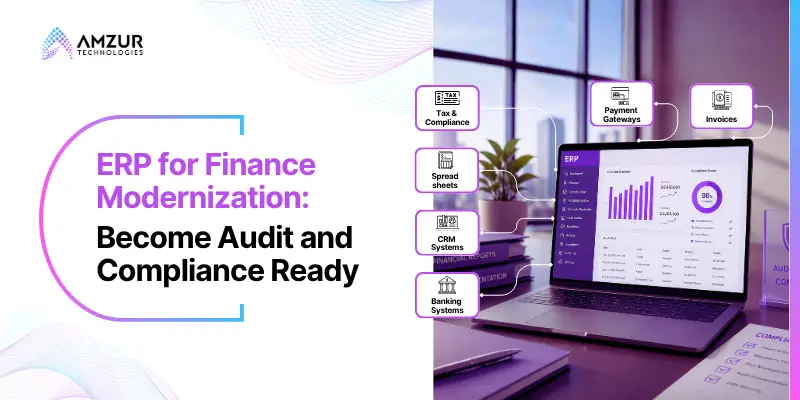
The spreadsheets that once supported your business begin slowing it down. Finance teams spend more time reconciling transactions than analyzing performance, while leadership waits for reports instead of acting on real-time insights.
This is the point where many growing businesses in Kenya realize spreadsheets are no longer a productivity tool; they’ve become a growth constraint. ERP for finance modernization is more than a technology upgrade; it’s a strategic investment that centralizes financial data, automates reconciliation, strengthens internal controls, and builds audit-ready finance.
Explore our NetSuite ERP solutions for Kenya SMBs.
How Spreadsheet-driven Finance Systems Cost SMB’s Growth
Most organizations recognize that spreadsheets consume time. What many don’t realize is how significantly they affect financial control, compliance, and business decision-making.
The problem isn’t Excel itself. The problem is using spreadsheets to manage business complexity, which they were never designed to handle.
As companies grow, several hidden risks begin to emerge.
1. Finance Teams Become Reconciliation Experts Instead of Strategic Advisors
Finance professionals should spend their time helping leadership improve profitability, optimize cash flow, and support business growth.
Instead, many finance teams spend days every month:
- Comparing multiple spreadsheets
- Matching invoices manually
- Verifying payment records
- Correcting broken formulas
- Consolidating reports from different departments
These repetitive tasks delay strategic planning and reduce the overall value finance teams bring to the business.
Modern Cloud ERP for finance modernization automates these routine activities, allowing finance professionals to focus on forecasting, scenario planning, and performance analysis.
2. Compliance Becomes Reactive Instead of Proactive
As Kenyan businesses continue embracing digital tax administration and electronic invoicing, maintaining accurate financial records has become increasingly important.
When financial information is scattered across multiple spreadsheets, organizations often struggle to:
- Track supporting documents
- Maintain approval histories
- Monitor financial controls
- Produce consistent audit evidence
- Validate tax-related transactions
This reactive approach increases operational risk while placing unnecessary pressure on finance teams.
3. Valuable Business Intelligence Gets Lost
Every spreadsheet contains data.
Very few generate actionable intelligence.
Business leaders require answers to questions like:
- Which customers generate the highest profitability?
- Which branches consistently underperform?
- Where are operating costs increasing?
- How healthy is our cash flow?
- Which product categories contribute the highest margins?
When information exists across dozens of disconnected spreadsheets, these insights remain hidden.
Instead of identifying trends early, businesses often react after problems become visible.
This opportunity cost is one of the biggest hidden expenses of spreadsheet-driven operations.
Learn more about eTIMs-ready ERP solutions for Kenya SMBs.
How Modern Cloud ERP Transforms Finance Operations
Modern finance teams need more than accounting software. They need connected systems that provide visibility, automate routine work, and strengthen financial governance.
This is where finance operations modernization delivers measurable business value. Rather than treating finance as an isolated function, a modern ERP integrates finance with sales, procurement, inventory, warehousing, purchasing, and operations. Every transaction updates financial records in real time, eliminating duplicate data entry and reducing reconciliation efforts.
Instead of asking, “Which spreadsheet contains the latest numbers?”, finance leaders gain instant access to accurate, organization-wide financial data.
Some of the biggest improvements include:
1. Automated Financial Workflows
Routine processes such as invoice approvals, purchase approvals, journal entries, expense management, and payment reconciliation become automated.
Automation reduces manual effort while ensuring every transaction follows standardized approval policies.
2. Faster Month-End and Year-End Closings
Month-end closing is often one of the most stressful periods for finance teams.
Modern ERP systems automate reconciliations, consolidate financial data, and reduce manual adjustments, helping organizations complete financial close processes significantly faster while improving reporting accuracy.
3. Built-in Audit Trails
Every transaction, modification, approval, and user activity is automatically recorded.
Instead of searching through emails and spreadsheets during an audit, finance teams can quickly retrieve complete transaction histories and supporting documentation.
Spreadsheets vs. Modern Cloud ERP for Finance Modernization
One of the biggest mindset shifts for growing businesses is recognizing that spreadsheets and ERP systems serve different purposes. While spreadsheets are excellent for ad hoc analysis, they are not designed to run integrated financial operations at scale.
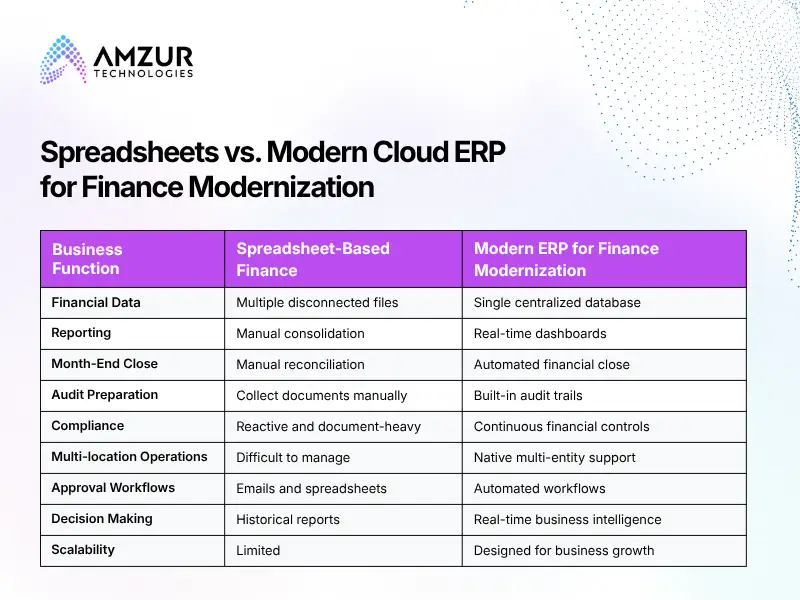
This transition from spreadsheets to modern ERP solutions allows finance teams to spend less time managing data and more time creating value for the business.
How NetSuite ERP Helps Kenya Businesses Become Audit and Compliance Ready
Choosing an ERP is about more than replacing accounting software. Growing businesses need a platform that improves financial visibility, automates manual processes, and supports compliance as operations become more complex. NetSuite ERP solutions provide the capabilities finance teams need to modernize operations and build an audit-ready business.
NetSuite ERP Key Capabilities That Support Audit-Ready Finance
1. Continuous Audit Trails
Automatically records every transaction, approval, and system change, making audits faster and more transparent.
This enables businesses to:
- Track who created, approved, or modified transactions.
- Maintain a complete history of financial records
- Retrieve audit evidence instantly.
- Reduce time spent preparing for internal and external audits.
Instead of manually collecting supporting documents, finance teams can provide auditors with a complete digital audit trail.
2. Automated Approval Workflows:
Manual approvals increase the risk of errors, policy violations, and unauthorized spending.
NetSuite automates approval workflows for:
- Purchase Orders
- Vendor Bills
- Expense Claims
- Customer Invoices
- Payments
- Journal Entries
Every approval is timestamped and permanently logged, strengthening internal controls while ensuring compliance with company financial policies.
3. Real-Time Financial Visibility
Audit readiness depends on having accurate financial information at any time; not only during year-end audits.
NetSuite provides:
- Real-time financial dashboards
- Drill-down reporting from summary reports to individual transactions
- Digital supporting documents
- Instant access to journals, invoices, and receipts
This allows finance teams to answer audit queries quickly while helping executives make faster business decisions.
4. Role-Based Access and Strong Financial Governance
Strong governance begins with controlling who can view, edit, approve, and process financial information.
NetSuite enables:
- Role-based user permissions
- Segregation of duties
- Secure authentication
- Encrypted financial data
- Controlled approval hierarchies
These controls reduce fraud risk while helping organizations demonstrate strong financial governance during audits.
5. Supports Kenya's Tax and Financial Compliance Requirements
Growing businesses in Kenya must comply with increasingly digital financial reporting requirements.
NetSuite can support organizations in meeting requirements such as:
- Integration with eTIMS for electronic tax invoicing through approved integrations
- Accurate VAT calculation and reporting
- Digital financial records for KRA reviews
- IFRS-compliant financial reporting
- Multi-entity and multi-currency reporting for regional businesses
By centralizing financial data and automating reporting processes, businesses can reduce compliance risk while simplifying regulatory reporting.
Note: eTIMS connectivity is typically achieved through certified integrations or implementation partners rather than being a native, out-of-the-box NetSuite capability.
6. Revenue Recognition and Financial Reporting Compliance
For software, SaaS, subscription, professional services, and project-based businesses, NetSuite automates revenue recognition based on configurable accounting rules.
This helps finance teams:
- Comply with IFRS 15 revenue recognition requirements
- Eliminate manual revenue calculations.
- Improve financial reporting accuracy
- Reduce audit adjustments
Automated revenue recognition provides greater confidence in financial statements while supporting consistent accounting practices.
Why it matters: Together, these capabilities help growing Kenya businesses replace spreadsheet-driven finance with a modern, centralized system that improves reporting accuracy, strengthens compliance, accelerates month-end close, and supports confident business growth.
ERP Modernization in Action: Automating Financial Reconciliation for a Multi-Location Retail Business
A growing coffee retailer with 15 retail locations and more than 800 wholesale customers was struggling with disconnected POS and accounting systems. Finance teams spent valuable time manually reconciling daily sales transactions, while fragmented data limited visibility into cash flow, inventory, and business performance.
To modernize its finance operations, Amzur Technologies designed and implemented a customized NetSuite POS integration that automated the flow of sales and payment data into NetSuite.
By eliminating manual data entry and reconciliation, the solution created a single source of financial truth across all store locations while improving accounting accuracy and operational visibility.
Business Outcomes
- Reduced reconciliation time by 60% through accounting process automation
- Eliminated manual data entry and third-party connector dependencies
- Improved accounting accuracy with automated financial reconciliation
- Delivered real-time visibility into cash flow, inventory, and store performance using NetSuite analytics
- Enabled finance teams to focus on financial analysis instead of repetitive administrative work
Key takeaway:
ERP modernization is not simply about replacing spreadsheets. It’s about automating finance processes, improving data accuracy, and giving leadership the confidence to make faster, data-driven decisions. This project demonstrates how the right NetSuite ERP solution can transform financial operations while creating measurable business value.
What’s Next For Kenya Finance Teams and CFOs
Investing in ERP for finance modernization enables organizations to replace fragmented processes with connected financial operations, improve reporting accuracy, automate routine tasks, strengthen compliance, and build confidence in every financial decision.
For businesses across Kenya, modern finance is no longer defined by how quickly reports are created. It is defined by how confidently leaders can trust the numbers behind every business decision.
At Amzur Technologies, we help SMBs and growth-stage organizations modernize finance through tailored Cloud ERP solutions for Kenya businesses. From ERP readiness assessments and secure data migration to NetSuite implementation, customization, integration, and ongoing optimization, our consultants help organizations build finance systems that are scalable, compliant, and ready for long-term growth.
Whether you are replacing spreadsheets, upgrading legacy software, or planning your next phase of digital transformation, our team can help you implement NetSuite ERP solutions that deliver measurable business outcomes.
Frequently Asked Questions
What is ERP for finance modernization?
ERP for finance modernization is the process of replacing manual, spreadsheet-driven financial processes with an integrated ERP platform that automates accounting, reporting, approvals, compliance, and financial analysis. It improves data accuracy, operational efficiency, and audit readiness.
Why are spreadsheets no longer sufficient for growing businesses?
Spreadsheets work well for simple financial tracking but become difficult to manage as businesses expand. Multiple versions of data, manual reconciliation, reporting delays, and limited audit controls make spreadsheets unsuitable for complex financial operations.
How does Cloud ERP improve audit readiness?
Cloud ERP systems maintain complete transaction histories, automate approval workflows, centralize financial records, and generate real-time reports. These capabilities simplify audits while improving compliance and financial transparency.
Why do CFOs choose NetSuite ERP solutions?
Many finance leaders choose NetSuite because it provides real-time financial reporting, multi-entity consolidation, automated workflows, audit trails, budgeting capabilities, and cloud scalability that support business growth.
How can ERP modernization benefit businesses in Kenya?
Modern ERP helps Kenyan businesses improve financial visibility, strengthen compliance, support multi-location operations, automate reporting, reduce manual processes, and make faster, data-driven decisions as they grow.

Author: Serghino Felix
Sr. Director – of Enterprise Applications
Serghino Felix is a seasoned ERP professional with nearly two decades of experience in the enterprise applications space. Known for connecting strategy with execution, he has built a career around turning complex business challenges into scalable, practical solutions, while keeping people and outcomes at the center of every engagement. His expertise spans delivery leadership, customer partnership, and strengthening enterprise application practices that drive real business transformation.