Retail Technology Transformation
Industry: Retail
Executive Snapshot
4 weeks
from Salesforce Commerce Cloud to Shopify Plus migration

40%+ reduction
in application portfolio complexity

12+ vendor platforms
assessed, rationalized, and optimized

25% increase in sales
attributed to restored PLCC checkout

End-to-end
transformation across people, process, and platforms

Overview
Ashley Stewart is a leading American retailer specializing in plus-size women’s fashion, serving customers through approximately 90 retail locations nationwide and a robust e-commerce presence. With a passionate customer base and strong brand loyalty, Ashley Stewart has been a trusted name in fashion retail for decades.
As the business scaled, its IT landscape evolved organically resulting in accumulated technical debt, fragmented systems, and limited business agility. Recognizing the need for modernization, Ashley Stewart partnered with Amzur Technologies to conduct a comprehensive IT assessment and execute a strategic transformation program.
The Challenge
Ashley Stewart faced a classic mid-market retail dilemma: legacy platforms and point solutions that once supported growth were now constraining speed, cost efficiency, and customer experience.
Key challenges included:
Legacy ERP System (JDA MMS)
14+ years without upgrades, running on IBM AS/400 infrastructure with mounting technical debt and no viable vendor support path.
High E-Commerce Costs
Salesforce Commerce Cloud (SFCC) and OMS licensing and operating costs were misaligned with business value.
Checkout & Payment Gaps
The Bread PLCC payment method critical to customer conversion was not supported natively on Shopify, creating checkout drop-offs post migration.
Promotion Limitations
Inability to run stacked or tiered promotions, SKU-level rules, or category exclusions with native tooling.
Integration Complexity
Data Silos
No single source of truth; reconciliation spread across systems and manual Excel workflows.
Operational Gaps
Limited DevOps maturity, manual QA processes, and single points of failure in critical resources.
Vendor Sprawl
12+ vendor platforms with inconsistent SLAs, uneven integration maturity, and suboptimal TCO.
The business required a partner who could architect a cohesive transformation strategy not just replace platforms but modernize how IT operated.
Unlock the Full Story Behind the Results
Enter your details to access the complete case study and outcomes.
The amzur approach
Amzur deployed a holistic assessment methodology focused on technology, process, and organizational readiness, ensuring changes would be sustainable beyond implementation.
Discovery & Assessment
Structured discovery sessions were conducted with stakeholders across IT and business including CFO/COO leadership, IT Directors, Product Managers, and technical leads.
Assessment dimensions included:
Platforms
- E-Commerce & OMS
- ERP Systems
- Retail / POS
- Data Warehouse
- Middleware / ESB
- Cloud Infrastructure
Processes
- DevOps maturity
- QA methodology
- Data governance
- Change management
- Business continuity
- Security & compliance
People
- Skills assessment
- Resource coverage
- Training gaps
- Vendor reliance
- Knowledge transfer
- Collaboration tools
Strategic roadmap
Based on assessment findings, Amzur delivered a prioritized roadmap:
- Quick Wins (QW) – High-impact, low-effort initiatives deliverable in weeks
- Short-to-Medium Term (SMT) – Strategic initiatives spanning 3–9 months
- Long Term (LT) – Foundational capabilities for sustained competitive advantage
Strategic Roadmap
Based on assessment findings, Amzur delivered a prioritized roadmap:
Quick Wins (QW)
High-impact, low-effort initiatives deliverable in weeks
Short-to-Medium Term (SMT)
Strategic initiatives spanning 3–9 months

Long Term (LT)
Foundational capabilities for sustained competitive advantage

The Transformation
1. Salesforce → Shopify Plus migration completed in 4 weeks
Setting a benchmark for speed without compromising business continuity
E-Commerce Modernization
The migration from Salesforce Commerce Cloud to Shopify Plus delivered immediate cost and agility benefits while enabling deeper functional enhancements:
-
Dramatically reduced licensing and operational costs
-
Improved site performance and customer experience
-
API-first architecture enabling future extensibility
Critical execution enhancements included
1. Automated Salesforce Data Migration
Products, customers, orders, SEO metadata, inventory, and discounts were migrated using automated extraction, transformation, and validation pipelines eliminating manual CSV/XML dependencies and ensuring zero data loss.
2. Custom Bread PLCC Payment Integration
A custom Shopify payment app was built to restore Bread PLCC functionality unavailable natively, featuring on-site credit application, branded checkout messaging, QA test modes, and seamless cross-device performance.
3. Advanced Promotions Engine
A custom promotion framework replaced Shopify’s rigid discounting, enabling stacked promotions, tiered offers, SKU- and category-level exclusions, attribute-based rules (size, color), and centralized merchandising controls.
2. ERP Consolidation
The legacy JDA MMS system running on IBM AS/400 was consolidated into NetSuite, resulting in:
-
Elimination of end-of-life infrastructure and technical debt
-
Unified financial operations (AP, GL) on a modern cloud platform
-
API-driven integrations with middleware and downstream systems
-
A scalable foundation for future retail and omnichannel growth
3. Data & Analytics Modernization
Amzur designed a modern data architecture to replace fragmented operational data stores:
-
Consolidated flows from ODS into an enterprise data warehouse
-
Implemented data governance and quality frameworks
-
Optimized Power BI reporting by offloading heavy processing
-
Automated reconciliation processes, reducing manual effort
4. Integration & Middleware Optimization
The MuleSoft layer was rationalized to support the new ecosystem:
-
Simplified complex integration rules across e-commerce, ERP, ODS, and vendors
-
Transitioned feed-file patterns to API-driven integrations
-
Enhanced error logging, monitoring, and alerting
5. Operational & Process Improvements
Amzur designed a modern data architecture to replace fragmented operational data stores:
-
Enterprise Architecture – Guiding principles for simplicity, modularity, scalability, and security
-
DevOps Maturity – CI/CD roadmap, automated testing, Infrastructure as Code
-
QA Practice – Transition from manual Excel testing to automated regression frameworks
-
Centralized Logging – Unified troubleshooting, security monitoring, and audit visibility
-
Business Continuity – Defined RPO/RTO objectives and disaster recovery protocols
Results & Business Impact
Technology Stack
-
Significant reduction in application complexity
-
Retirement of legacy and end-of-life systems
-
Modern, API-first architecture
Sales & Checkout
-
25% increase in sales attributed to restored Bread PLCC checkout
-
Higher AOV driven by PLCC promotions and tiered offers
-
Faster, more reliable checkout experience
Operational Efficiency
-
Faster time-to-market for promotions and site changes
-
Reduced manual intervention across data and QA processes
-
Improved system uptime and reliability
Cost Optimization
-
Lower licensing costs through platform consolidation
-
Reduced operational overhead via automation
-
Optimized vendor contracts and TCO
Customer Experience
-
BOPIS enablement with real-time inventory sync
-
Loyalty balance lookup within customer accounts
-
Improved ADA compliance, privacy controls, and consent management
Future Readiness
-
Scalable cloud-native foundation
-
Omnichannel-ready architecture
-
Data platform prepared for advanced analytics and AI initiatives
Client Perspective
Lori Harmon
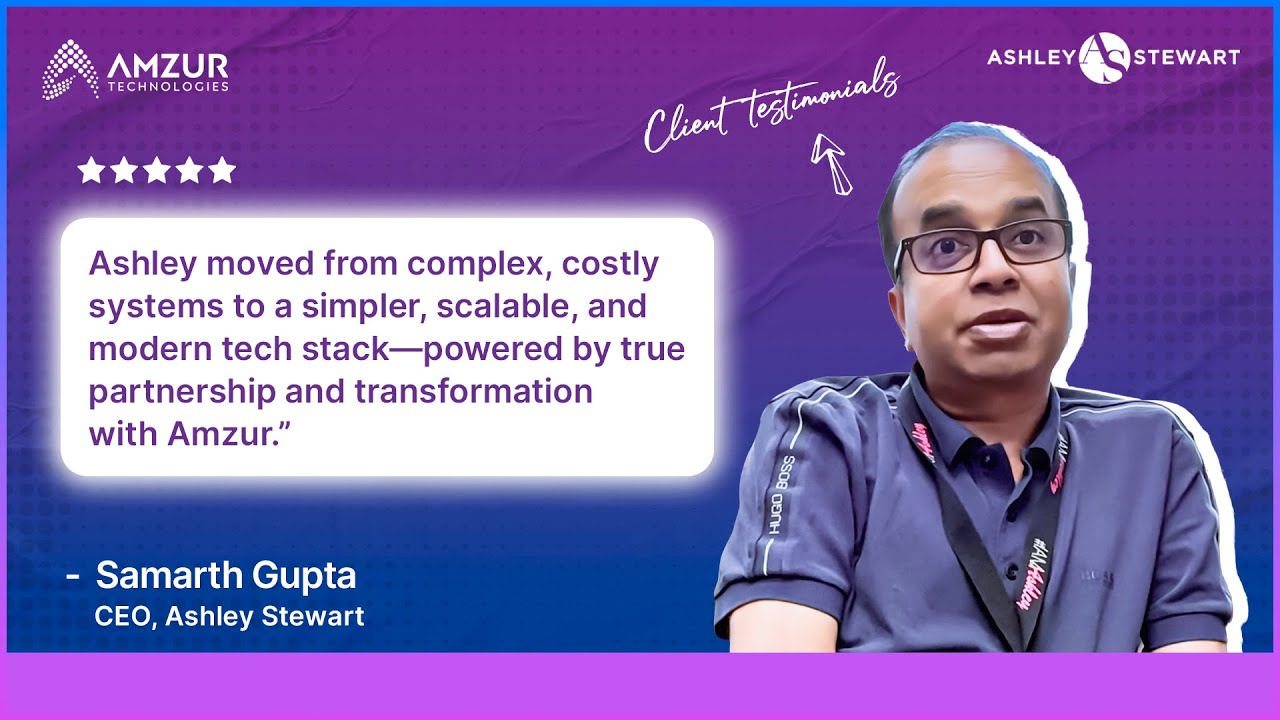
"Amzur brought a level of strategic thinking and execution excellence that exceeded our expectations. The 4-week e-commerce migration alone demonstrated their ability to deliver enterprise-grade transformations at startup speed. They didn’t just implement technology, they helped us rethink how we operate as an IT organization"
Why Amzur
This engagement demonstrates Amzur’s core differentiators in delivering retail technology transformations:
Holistic Assessment Methodology
We don't just audit technology, we assess the interplay of people, processes, and platforms to deliver sustainable transformation

Pragmatic Roadmapping
Prioritized recommendations (QW/SMT/LT) that respect budget realities while building toward strategic goals

Partnership Approach
We work alongside your team, building capability and ensuring knowledge transfer throughout the engagement

Execution Velocity
The 4-week Shopify migration proves our ability to move fast without compromising quality.
Retail Domain Expertise
Deep understanding of retail operations, omnichannel requirements, and the vendor ecosystem.

Experience a tailored approach to unlocking success aligned with your goals.
Start the conversation today!